
Where to Find the Most Beautiful Azulejos in Porto, Portugal
An iconic symbol of Portugal, azulejos adorn building facades from north to south, even decorating chapels and homes on the far-flung Azores and Madeira.
But where can you find azulejos in Porto? The answer — all over the city center! From secret azulejos in the nooks and crannies of Porto’s largest cathedral to blazing blue tiles embellishing chapels across the city. It seems like Portugal’s signature tiles are around every corner.
On your trip to Porto, seek out the colorful azulejos bit by bit, or dedicate an entire day to a DIY azulejo treasure hunt. Whichever option you decide to choose, this is your guide on where to find the most beautiful azulejos in Porto.
The history of Portuguese tiles
Azulejos were introduced to Portugal by the Moors, sometime around the 13th century. Because they were a product of invasion, they weren’t popularized until the 16th century, when they began gracing the facades and interiors of palaces and churches.
The word “azulejo” directly translates to “little polished stone” in Arabic. Although often incorrectly attributed to the Portuguese word for blue, azul, the word was actually derived from azzelij or al-zillij.
An affection for Chinese porcelain, which was extremely popular during the Age of Discovery (essentially the 1600s to the 1800s), is one reason why most azulejos are a beautiful blend of blue and white.
Are all Portuguese tiles blue?
In short, no! Portuguese tiles can be any color. That being said, the most common color, especially when it comes to older tiles, is blue and white.
As I was traveling around Northern Portugal, I came across azulejos in a rainbow of colors, which you can see from my pictures below!
A Map of the Most Beautiful Azulejos in Porto
Where to Find the Most Beautiful Azulejos in Porto, Portugal

Capela das Almas
- Location: Chapel of Souls
- Getting There: Hop off at the Trindade metro stop and walk east up Rua de Fernando Tomas.
Displaying possibly the most vibrant azulejos in Porto, the small chapel of Capela das Almas is tucked away on the edge of the city’s most bustling pedestrian street.
Translated to mean “Chapel of Souls,” the church was built in the late 18th century but wasn’t decorated in its signature, indigo azulejos, until 1929. Almost 16,000 tiles were used, carefully placed to recreate scenes from the lives of Saint Catherine and Francis of Assisi.
The tiles were created in Lisbon by designer Eduardo Leite. Despite its elaborate facade, the interior of the chapel is a bit more humble with gilded details.
One of the most iconic pictures to snap in Porto is with the facade of this chapel in the background, but you’ll need to visit at sunrise for the best chance of being alone.
Situated at the northern tip of the Bolhao neighborhood, peruse local products at Mercado Bolhao or pop into Manteigaria for a piping hot pastel de nata after visiting Capela das Almas.
Igreja de Santa António dos Congregados
- Location: Igreja de Santo António dos Congregados
- Getting There: Get off at São Bento metro station and walk up Avenue Dom Afonso Henriques for about a minute.
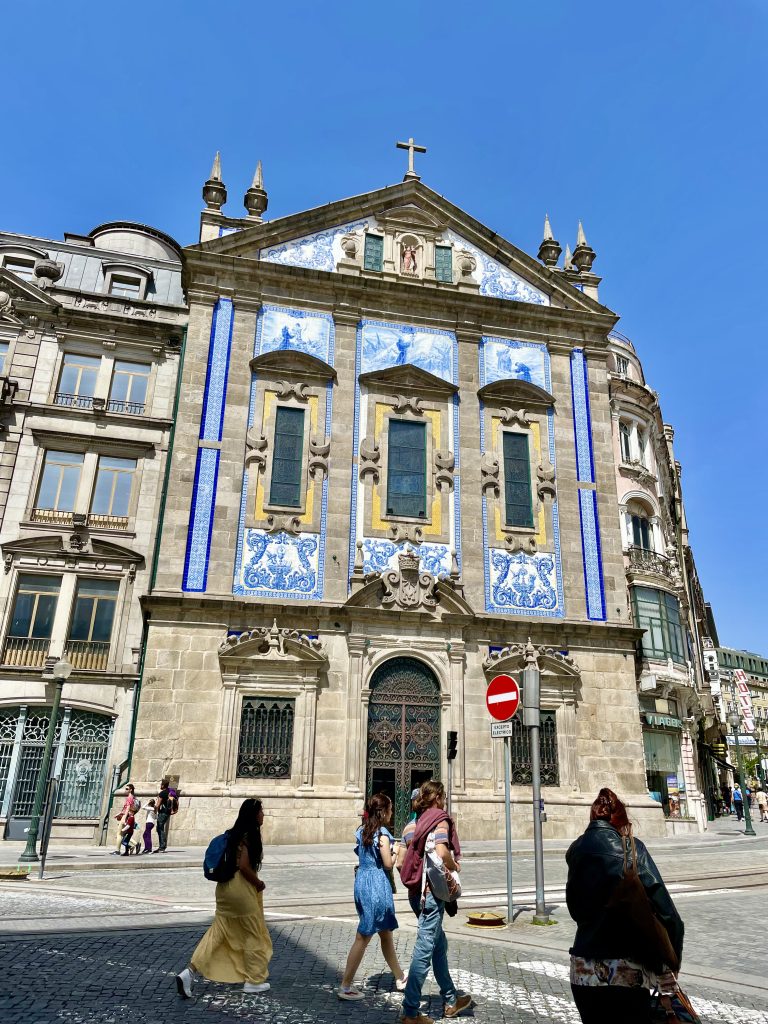
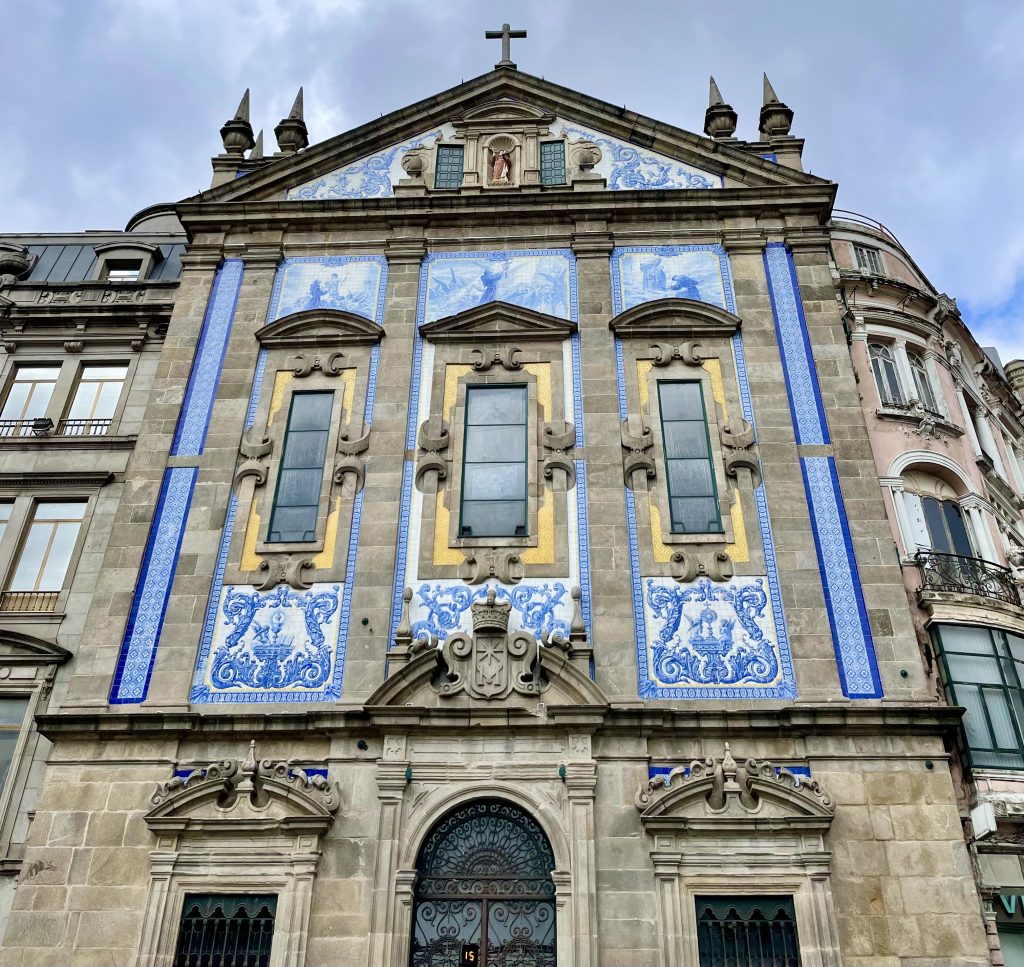
Situated just opposite the Sao Bento Train Station, Igreja de Santa Antonio dos Congregados is a lesser-known azulejo beauty in Porto. Often overshadowed by its next-door neighbor, Sao Bento Station, the church’s facade is decorated in azulejos, designed by Jorge Calaco — the same artist who bedazzled the tiles at Sao Bento station.
Built in 1703, Igreja de Santa Antonio dos Congregados also happens to be the only resting place of a pope outside of Vatican City. You can step inside to see the church’s Baroque interior from 10 AM–12:30 PM and 1–7:30 PM, Tuesday through Sunday. Keep in mind the church does open an hour early on Sundays.
Sao Bento Station
- Location: Porto São Bento
- Getting There: Get off at the São Bento metro station. The train station is right across the street.
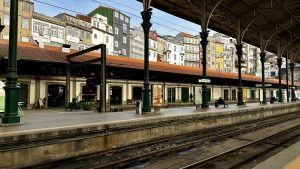
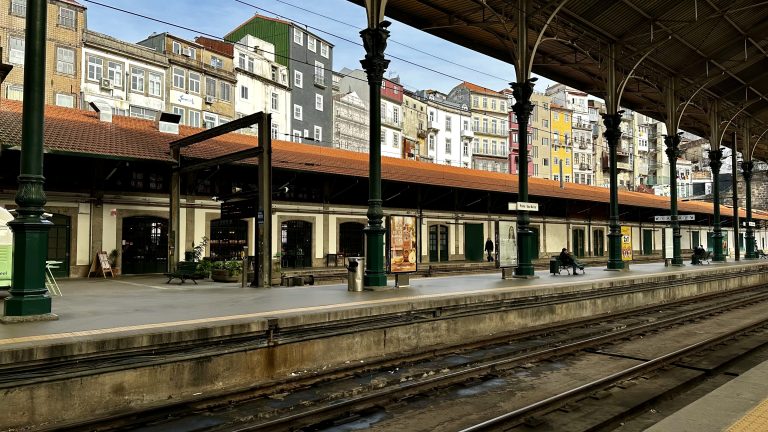
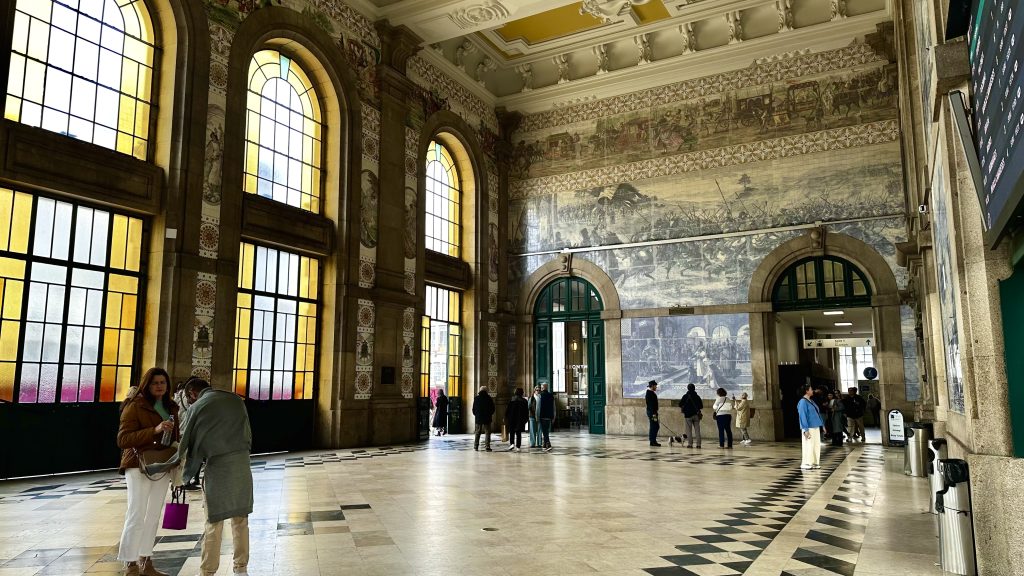
Tucked in Porto’s UNESCO World Heritage Historic Center, more than 20,000 tiles adorn the vestibule walls of the Sao Bento Train Station.
These marvelous azulejos were created by Jorge Colaco over 11 years, depicting scenes of village life and historic moments in Portuguese history. You’ll see several layers of murals, which include traditional blue and white azulejos and more true to color, lifelike portraits near the ceiling.
Although it might appear to be hundreds of years old, Sao Bento Station was actually built in 1900 on the site of the Sao Bento Convent (hence its name).
If you’re arriving to Porto by train, go the extra mile and book your ticket all the way to Sao Bento (as opposed to Campanha). The wow-factor upon stepping foot inside the main station is worth the switch!
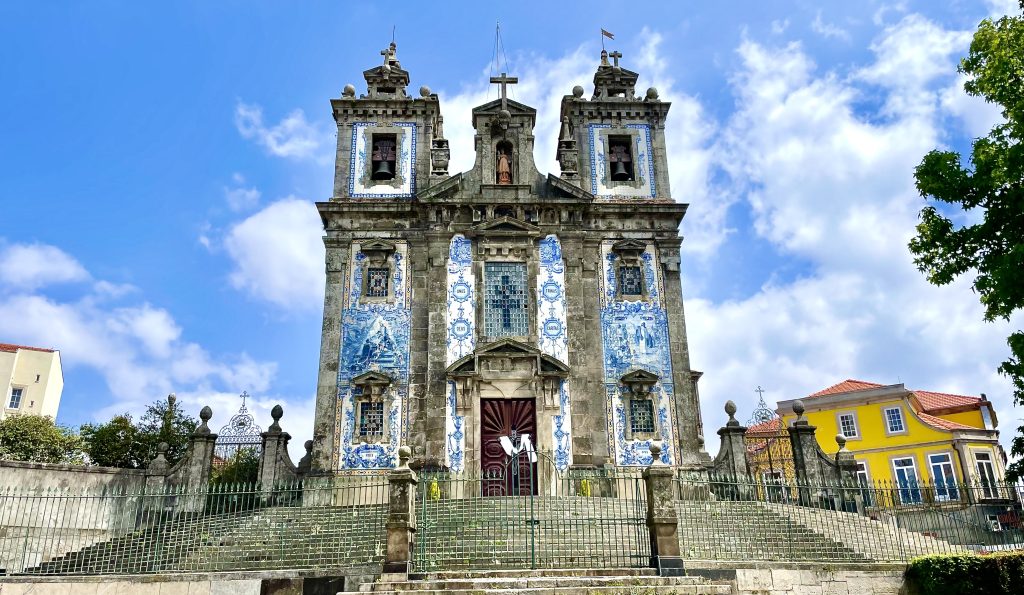
Igreja de Santo Ildefonso
- Location: Church of Saint Ildefonso
- Getting There: Get off at the Sao Bento metro station and walk past the train station on your right and up Rua 31 de Janeiro.
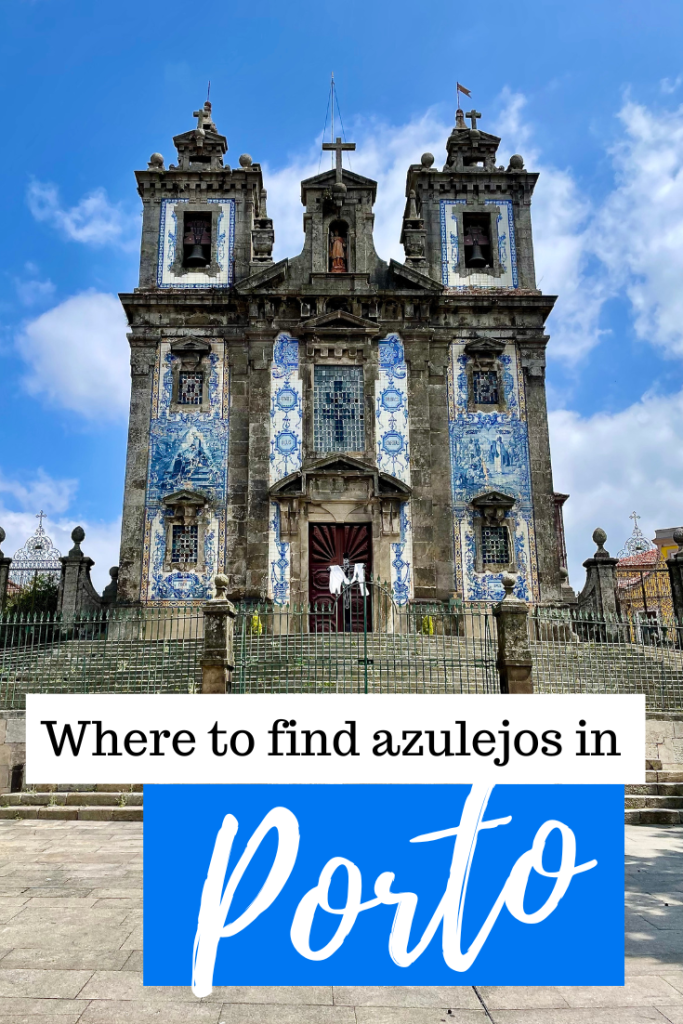
A bit of a lesser known azulejo-clad church in Porto, Igreja de Santo Ildefonso sits perched on a hill in the center of the city. Its iconic twin towers and Baroque facade may have been designed in the 1700s but it wasn’t until 1932 that the vibrant blue azulejos were added.
Jorge Calaço, the same artist that created tiles for Sao Bento Station and many other buildings throughout Porto, also designed the 11,000 azulejos that adorn the church’s facade. These particular tiles depict the life of Saint Ildefonso and scenes from the gospel.
A small, artisan market is sometimes set up in the courtyard of the church, known as Feira de Artesanato da Batalha. While it might not be worth going out of your way for, it makes for a fun peruse if you’re in the area.
On the other hand, don’t miss heading over to Cervejaria Gazela — an Anthony Bourdain favorite that’s right around the corner!
Porto Cathedral (Se do Porto)
- Location: Porto Cathedral
- Getting There: Get off at Sao Bento metro station and walk up the hill along Ave Dom Afonso Henriques
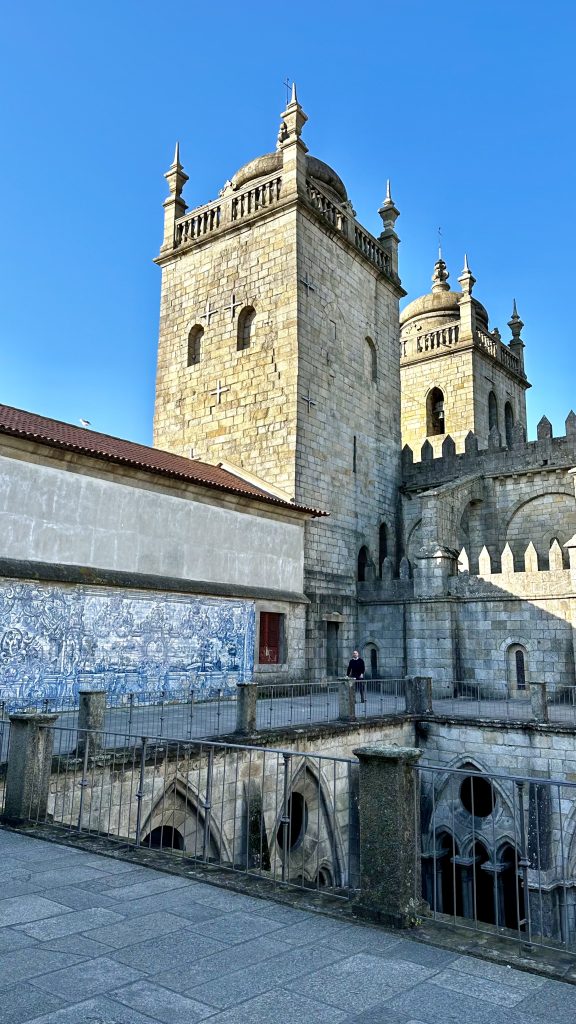
You can’t miss the Romanesque Se do Porto, towering over the city from its hilltop perch. At first glance, the cathedral looks like a humble relic of a bygone era, its stately square towers and cupolas creating an iconic silhouette.
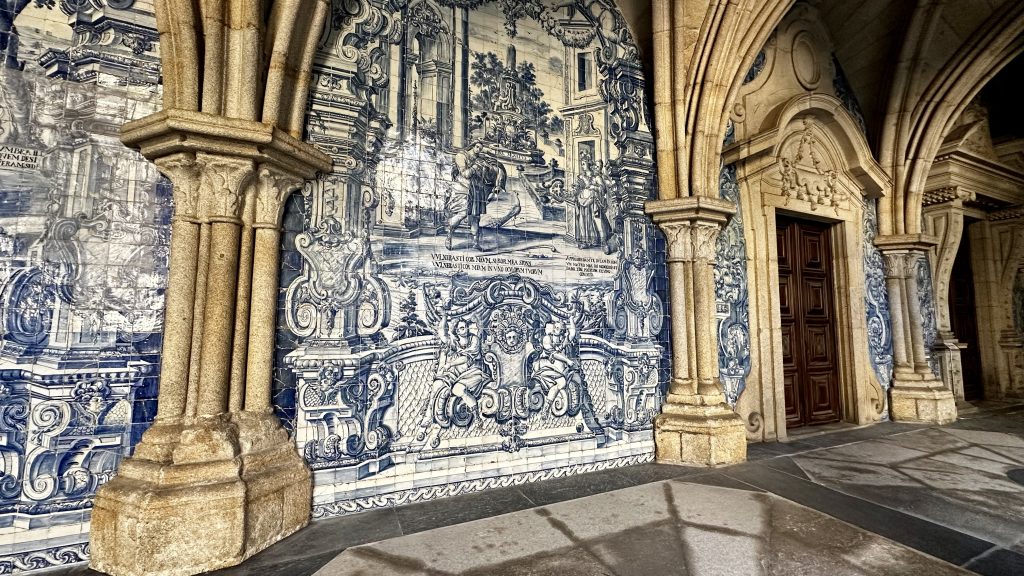
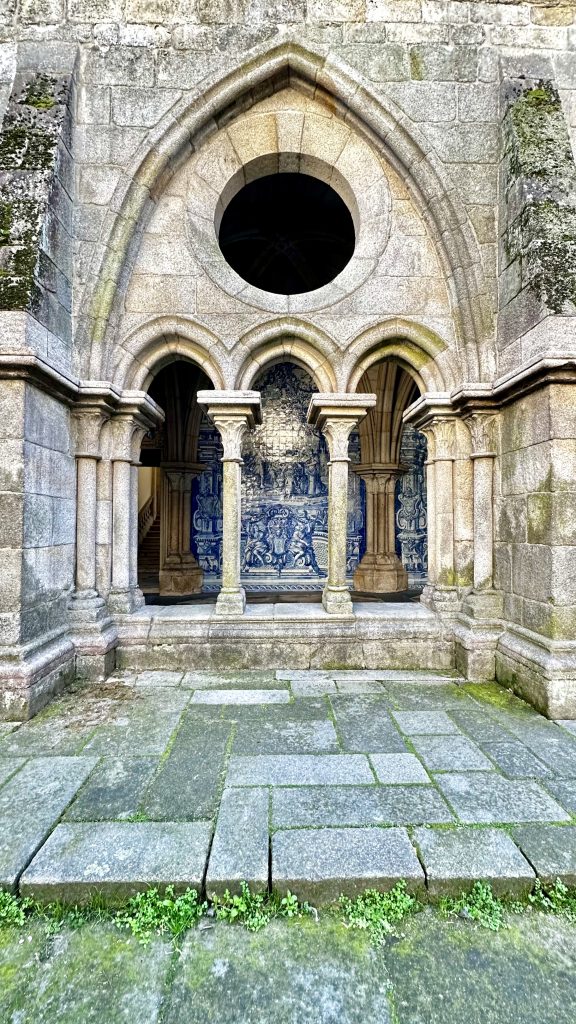
Come a bit closer and you’ll see that while this cathedral does have azulejos hidden in pockets on its facade, you’ll have to look inside to find the true beauties.
Pay the small entrance fee to gain access to the Gothic cloisters and second floor terrace, where you’ll find stunning blue and white murals. The cloisters were possibly our favorite azulejos in all of Porto!
The history of this building is equally as fascinating as the azulejos! Construction started in the 12th century, making this one of the oldest buildings left in Porto. Don’t forget to climb all the way to the top where you’ll have panoramic views of the city.
We didn’t pay to go inside on our first trip to Porto and we really missed out! I’m so happy we went inside the second time around.
Igreja do Carmo
- Location: Igreja dos Carmelitas
- Getting There: Take the Line 18 tram to Carmo or walk from the Aliados metro station
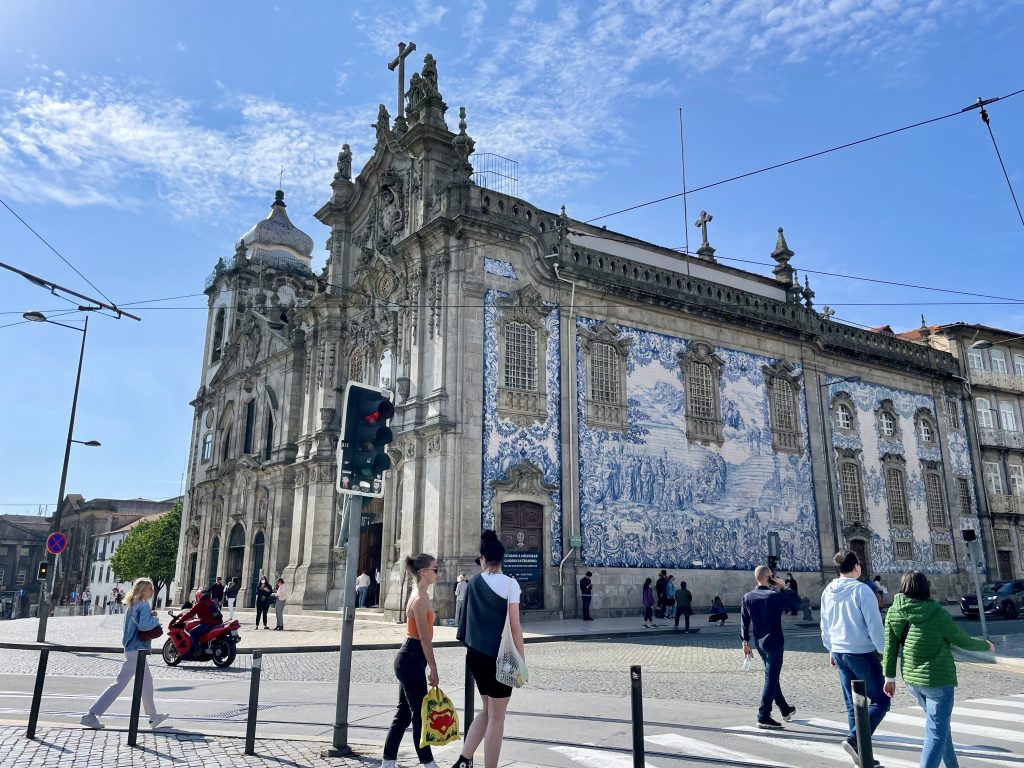
Igreja do Carmo’s azulejos make for one of the best photo backdrops in the city. Like many azulejos around Porto, these were laid in the 20th century, despite the church being built in the 1700s.
Often incorrectly attributed to its neighbor Igreja dos Carmelitas, these twin churches are only separated by a 3 foot wide house, reportedly built to keep the nuns of Carmelitas and monks of Carmo divided.
In fact, these tiles are easily missed unless you walk around to its eastern facade or approach from the nearby Livreria Lello. Step inside the church itself to see gilded altars that are almost as impressive as their tile counterparts!
Traffic is a bit less intense around Igreja do Carmo (especially when compared to Capela das Almas), which also makes it such a wonderful spot for pictures.
Casa da Musica
- Location: Casa da Música
- Getting There: Get off at the Casa da Musica metro station and walk up Ave da Franca.
Casa da Musica’s azulejos are the most hidden of Porto’s coveted blue tiles. In fact, you’ll have to visit their VIP room to see them. Designed by Dutch architect Rem Koolhaas for Porto’s designation as the European Capital of Culture in 2001, Casa da Musica is a concert hall known for its futuristic architecture.
You’ll need to take a guided tour to get access to the VIP room, but it’s worth it to see the beautiful azulejos, overlooking the city. The tiles in this room are modern in make although designed to resemble antique tiles, using the famous Dutch Delft Blue.
Around the City
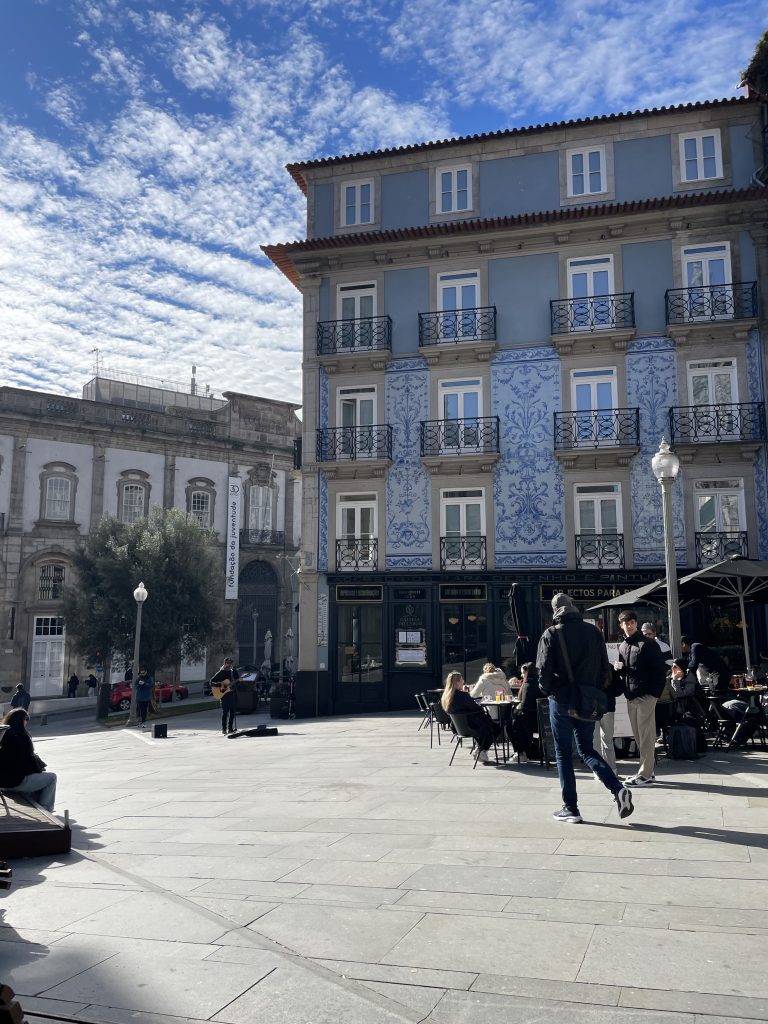
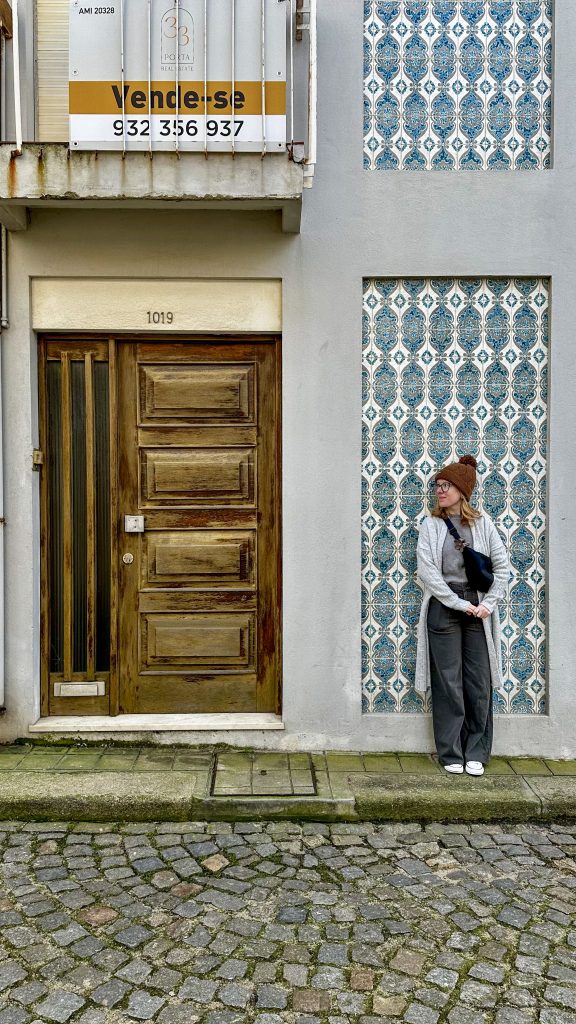
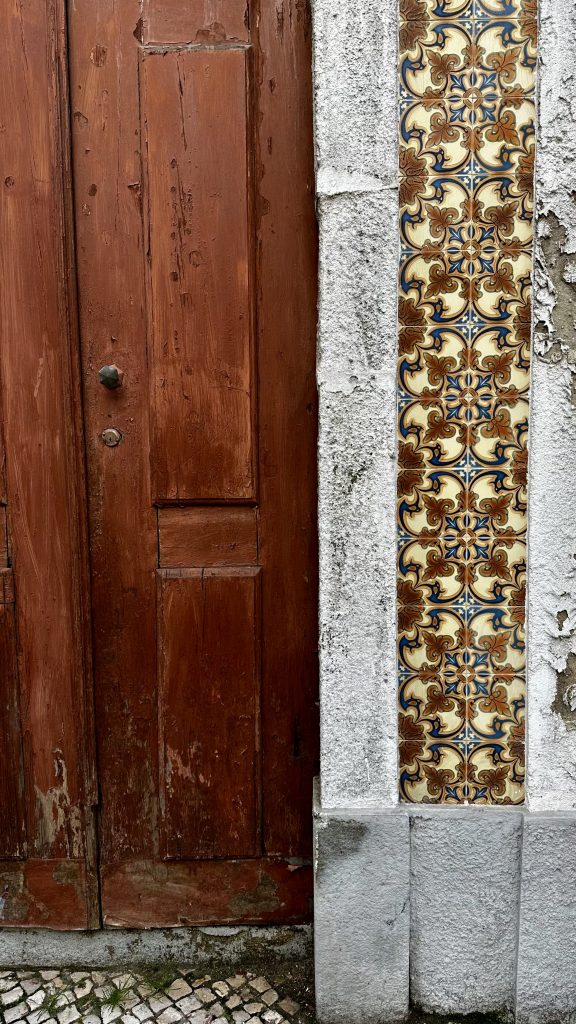
You can find azulejos on many different buildings in Porto, not just the important ones! Take a stroll through residential neighborhoods, the historic center, and other off-the-beaten-path corners of the city and you’ll see beautiful tilework.
During my time in Portugal I started “collecting” pictures of Portuguese tiles. Here are just a few examples of some of the gorgeous tiles I found along the way.
Where to buy azulejo tiles in Porto
If you’re wondering where you can find azulejo tiles to take home with you as a souvenir, small boutiques are located all over the city! Tiles from these shops are handmade in Portugal, so you know you’re getting the real-deal from a reputable Portuguese business.
Tip: Avoid buying “antique” azulejos as many have been taken from historic landmarks throughout the country.
Gazete: Aside from their beautiful storefront, Gazete also offers azulejo making courses, teaching students more about their preservation efforts and history along the way.
AZULIMA: More of a commercial azulejo retailer, AZULIMA is a great place to browse tiles for large projects.
Zinda: All of the tiles, sculptures, and other works of art at Zinda are made by none other than Zinda herself! A local artist, just stepping inside her workshop is half the fun.
Prometeu Artesanato: A sprawling tile shop with two locations in Porto, Prometeau Artesanato offers wall after wall of azulejos to browse. They also have unique tile-themed souvenirs.
Make your own azulejos in a workshop
Boiler Studio: A fun workshop hub in the center of Porto, Boiler Studio combines a few of Portugal’s wonderful traditions, including azulejos. You can paint your very own in their two hour workshop and pick up your tile the same day. They also offer pastel de nata making classes!
Gazete: The same sisters who brought you the beautiful Gazete store also offer an in-depth workshop, teaching students how to paint azulejos and more about their history. They’ve begun preserving Portugal’s many azulejos in a catalog and can help you to paint a classic design that reflects a piece of Portuguese history.
Frequently Asked Questions
Where can I see azulejos in Portugal?
You’ll find azulejos in most major cities in Portugal and small villages.
What is the famous tiled church in Porto?
It’s common for azulejos to adorn church facades in Portugal and Porto is no exception. Some of the best azulejo-covered churches are Capela das Almas, Igreja de Santa Antonio dos Congregados, Igreja de Santa Ildefonso, and Igreja dos Carmelitas.
Headed to Porto? Save this post for later!